Nihilism
How did this get popular?

I studied Russian history in college and that’s when I learned about nihilism. Russian history isn’t particularly uplifting or inspiring; it also isn’t boring. The events are dramatic, exciting, and sometimes breath-taking. Fall semester covered Tsarist Russia. You got your rise of Muscovy, building of St. Petersburg, imperial expansion under Catherine the Great, freeing the serfs, student revolts, attempted assassinations—not to mention, the Three False Dmitris. By Christmas break, it seemed Russia’s history of violent oppression was leading somewhere, approaching a boiling point. How could the common people put up with this forever? Could Tsarist rule be overthrown? We ended that term on the brink of revolution and the promise of a better life for the Russian masses.
Spring semester brought us to the tumultuous enclaves of Russia’s revolutionary exiles in London and Geneva, the turgid writings of Lenin, the Kronstadt rebellion and the storming the Winter Palace. Revolution! Finally, the peasants and workers would no longer be oppressed by the bourgeoisie! (Wait—Russia had a bourgeoisie?) the assassination of Trotsky, death of Lenin, and the rise of Stalin. I remember writing a paper on the latter: “Stalin soon removed Kamenev and Zinoviev from the the Politburo, and indeed from mortal existence.” (Sound familiar?)
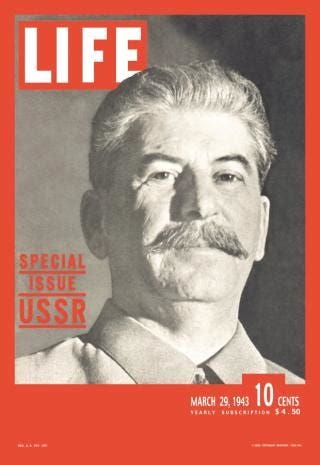
Collectivization and socialist re-education failed to create communist utopia. It was World War II—after “Uncle Joe” Stalin switched sides to join the Allies—that propelled the USSR towards modern world power status. The Cold War lasted longer than my college years, but those history courses were helpful for understanding communism’s collapse. Subsequent economic and political reforms in the early 1990s brought Russia to the brink of optimism. Still, history carries a weight. Every time it looks like there will be an opening to the West, modern life, or or some kind of democratic breakthrough that allows Russians a glimmer of hope . . . uh oh! Not again.
I recall Masha’s entrance in the Chekhov play, The Seagull:
Medvedenko: Why do you always dress in black?
Masha: I am in mourning for my life.
Now consider the Republican majority in the the current House of Representatives. Recent headlines warn that chaos in the caucus will result in the shutdown of the United States Government on October 1.
Here’s a sampling of news reports:
Speaker of the House Kevin McCarthy: “They just want to burn the whole place down.”
Both ends of the political spectrum have converged on the view that Republican nihilism is ascendant. At long last, a political view that we all agree on!
From the Right:
Rupert Murdoch’s New York Post: Earth to Matt Gaetz: Narcissistic nihilism only helps the Left (editorial).
The Financial Times: Republicans have become the party of nihilism
The Bulwark: The nihilism of “LOL Nothing Matters Republicans.”
From the Left:
Lawyers, Guns, & Money: Rule and Ruin: Reactionary nihilism as a governing philosophy
The Nation: The Government Shutdown Is a Cartoonishly Bad—but Still Terrifying—Sequel. The latest congressional villains are the GOP’s hard-right nihilists, but their motives for sabotaging the government make no sense.
The “burn it all down” political philosophy has its place in history. In the late nineteenth century it developed as a cultural movement called Russian nihilism.
Nihilism is defined in the (peer-reviewed) Internet Encyclopedia of Philosophy as:
. . . the belief that all values are baseless and that nothing can be known or communicated. It is often associated with extreme pessimism and a radical skepticism that condemns existence. A true nihilist would believe in nothing, have no loyalties, and no purpose other than, perhaps, an impulse to destroy.
Nihilist philosophy is, at its crux, negation. Nihilism developed, in part, from ideas posited by German philosopher Friedrich Nietzsche. He perceived society as lacking objective order or intrinsic truth, as the place where imposed beliefs are taken as true. If the social world is a delusion consisting of fiction and trickery, a person’s life could have no meaning. In such an environment, the individual could bear no responsibilities—and suffer no constraints.
Nietzsche’s ideas were used to provide an intellectual veneer for fascism in the 1920s. Nihilism wasn’t the most salient aspect of Nazi ideology; Hitler’s circle drew more from Nietzsche’s musings on a hypothetical that divided humans into distinct classes: the Übermenschen (Supermen) and the Untermenschen (subhumans). In addition to his ideas, Nietzsche’s close friendship with Richard Wagner (whose operas extolled a so-called Aryan mythos) made the philosopher the perfect intellectual adjunct for Naziism. The extent to which Nietzschean philosophy facilitated fascism (by providing intellectual respectability for its murderous ideology) is a matter of ongoing debate among historians and philosophers. But that is not our concern here. We need to talk about the Russians.
The touchstone for our “LOL nothing matters Republicans” is Russian nihilism. Nurtured in the suffocating repression of the Russian Empire, the movement combined an attitude of nihilistic carelessness with bomb-throwing anarchism and (later) smash-the-state Leninism. (It’s current exponent in the US is Trump advisor Steve Bannon.)
The mindset of Russian nihilism justified revolutionary anarchism and violence. Ivan Turgenev captured this in his novel, Fathers and Sons:
‘He's a nihilist,’ repeated Arkady.
‘A nihilist,’ said Nikolai Petrovitch. ‘That's from the Latin, nihil, nothing, as far as I can judge; the word must mean a man who... who accepts nothing?’
‘Say, who respects nothing,’ put in Pavel Petrovitch, and he set to work on the butter again.
‘Who regards everything from the critical point of view,’ observed Arkady.
‘Isn't that just the same thing?’ inquired Pavel Petrovitch.
‘No, it's not the same thing. A nihilist is a man who does not bow down before any authority, who does not take any principle on faith, whatever reverence that principle may be enshrined in.’
And no one can say the Russian nihilists were untalented—they excelled at literature, forming underground conspiratorial circles, and surviving prison.
In our present reality, the Nothing Matters caucus in the House starves the federal government of cash while their colleague Tuberville in the Senate restricts the life-blood of the military—the flow of promotions renewing its leadership. As in Russia, nihilists aim to tear down this country’s institutions and replace them with . . . nothing.
If Nothing Matters Republicans can’t throw a literal bomb at the government, shutting it down is a decent substitute. Because, as Carl Hulse notes in the New York Times,
[A Republican nihilist minority] sees the federal government as . . . a dangerous monolith to be broken apart with little regard for the consequences. They have styled themselves as a wrecking crew aimed at the nation’s institutions on a variety of fronts. . . .
‘We have seen for the past decade this kind of rump faction of far-right Republicans who obviously don’t believe in government,’ said Matt Dallek, a professor of political management and historian at George Washington University. He called their rise in the House ‘the fairly logical culmination of an increasingly radical and increasingly extremist Republican Party.’
Is this what we want—to accept nihilism and become a hopeless, morose, and angry people? Here, destroying institutions doesn’t mean dismantling the mechanisms of autocratic rule . . . it’s the opposite. The United States of America has prospered with its institutions of democratic governance for over 200 years. Americans celebrated the nation’s bicentennial in 1976. Will we be celebrating our democracy’s 250th anniversary in 2026?
The moral of the story: Following the Russian example—in philosophy, politics and economics—is never a good idea.
Related Grounded articles:
Keep scrolling down (below Notes) to reach the comments, share, and like buttons.
Follow me on social media:
Post.News Bluesky CounterSocial Facebook
Notes:
Carl Hulse, The Wrecking-Ball Caucus (NYT unlocked article).
Annie Karni and Carl Hulse, Right-Wing Rebels Block Defense Bill Again, Rebuking McCarthy on Spending (NYT unlocked article).
Chris Lehmann, The Government Shutdown Is a Cartoonishly Bad—but Still Terrifying—Sequel.
Scott Lemieux, Rule and Ruin.
Tim Miller, Bob Woodward and the Nihilism of “LOL Nothing Matters Republicans.”
Hopefully, now that working Americans are learning to flex their muscle, they will realize that the plans of the idiots on the right are nothing more than a bid to keep them subservient to the rich (oligarchs). So far, our institutions are holding against this most recent threat as they have against similar ones in our nations history. Thanks for a really great, pithy summarization of Russian history for those of us who never really studied it except in the context of WWII1
Wonderful article. It always amazes me that we don't really learn from history. It deeply concerns me that our country seems to be going into the dumpster. Trying hard to keep optimistic!